

Beyond Good Science. The Business of Clinical Development
In this episode of the Driving the Business of Science podcast, host Keith Parent, CEO of Court Square Group, speaks with Kieran Engels, CEO and Co-Founder of Seuss+, about the business challenges that sit alongside clinical development.
They discuss vendor management, contracts, governance, risk management, and the realities facing small biotech companies working with external partners. Kieran shares her perspective on what helps sponsor-vendor relationships work effectively, including clear expectations, accountability, communication, and a fit-for-purpose approach to oversight.
The conversation also looks at the challenges of global clinical trials, remote collaboration, cost management, and the role external support can play when internal teams have limited capacity.
Listen on your favorite podcast platforms
iHeart Radio | Apple Podcasts | Spotify | Amazon Music | Buzzsprout
Guest Profile – Kieran Engels, Kieran Engels, CEO and Co-Founder, Seuss+
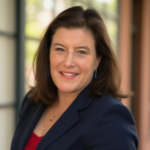
Kieran Engels is the CEO and Co-Founder of Seuss+, a strategy and execution consultancy focused on vendor governance and clinical development oversight. Based in Amsterdam, she works globally with biotech and pharmaceutical sponsors to structure the governance conditions that determine whether clinical programs succeed or fail.
Her career spans 20+ years in clinical development, including leadership roles across program management, vendor oversight, and operational strategy. She has worked with sponsors ranging from emerging biotech to established pharmaceutical companies across Phase 1-3 programs.
Kieran Engels writes and speaks about the structural patterns that cause clinical programs to underperform – not because the science failed, but because the governance between strategy and execution was never properly designed.
Introduction to the Podcast and Guest
- Keith Parent introduces himself as the CEO of Court Square Group and explains the purpose of the podcast, “Driving the Business of Science.”
- Keith highlights the importance of understanding the various functions in the life science industry.
- Keith introduces Kieran Engels from Seuss+, a CEO and co-founder, and provides an overview of Court Square Group’s services, including ARCC (Audit Ready Compliant Cloud) and RegDocs365™.
- Kieran Engels shares her background, mentioning her 30 years in the Netherlands and her co-founding of Seuss+ with her business partner.
Kieran Engels’ Background and Seuss+’s Mission
- Kieran explains that she and her business partner saw the need for better interaction between pharma/biotech and their vendors.
- Kieran describes how Seuss+ initially focused on CRO selection but later expanded to overseeing the entire process from beginning to end.
- Kieran emphasizes their love for working with small pharma and biotech due to their entrepreneurial spirit and lack of capacity.
- Kieran explains that Seuss+ works on the business side of science, focusing on Excel, contracts, invoices, governance, KPIs, and metrics.
Challenges in the Life Science Industry
- Keith discusses the challenges of working with large pharma companies, including issues of silos and hierarchies.
- Keith highlights the advantages of working with smaller biotechs, which are less risk-averse and more willing to try new things.
- Keith and Kieran discuss the economic aspects of the industry, including the high costs of developing a drug product and the importance of fit-for-purpose solutions.
- Keith emphasizes the need for small biotechs to understand the business side of things to avoid running out of cash and to attract investors.
Kieran’s Journey into Clinical Research
- Kieran shares her journey into clinical research, mentioning her master’s in health economics and her early career in an entrepreneurial company.
- Kieran describes her experiences on the vendor side and the challenges of aligning delivery personnel, finance, contracts, and operations.
- Kieran explains how Seuss+ aims to ensure the success of relationships by focusing on contracts, finance, human interaction, performance, and governance.
- Kieran emphasizes the importance of clear communication and accountability in clinical development to avoid executional failure.
Impact of Risk Management and Fit-for-Purpose Approach
- Kieran discusses the importance of risk management and the fit-for-purpose approach in clinical development.
- Kieran explains how ICH E6(R3) Good Clinical Practice has helped drive this approach, emphasizing the need for clear requirements and vendor selection.
- Kieran highlights the benefits of risk management in prioritizing resources and aligning different layers of accountability.
- Kieran mentions the challenges of managing global studies and the importance of having a virtual team to handle these complexities.
Client Base and Global Reach
- Keith asks about Kieran’s client base, and Kieran explains that it is split equally between the US and Europe, with studies conducted globally.
- Kieran describes how Seuss+’s global reach allows them to work with clients in various regions, including Asia, Africa, North and South America, and Europe.
- Kieran explains how the COVID-19 pandemic has changed the way they work, with more virtual interactions and a need for structured and intense communication.
- Keith and Kieran discuss the impact of remote work on risk management and the importance of having the right expertise and capacity.
Economic Aspects of Working with Clients
- Keith asks about the economic aspects of working with clients, and Kieran explains how they manage costs by understanding the location of teams and vendors.
- Kieran describes how Seuss+’s virtual model allows them to work with clients in different time zones and regions, providing flexibility and efficiency.
- Kieran highlights the importance of having a structured and intense interaction between vendor teams and clients to ensure project success.
- Keith and Kieran discuss the challenges of managing global studies and the need for clear communication and accountability.
Ideal Client Profile and Value Proposition
- Keith asks about the ideal client profile, and Kieran explains that Seuss+ works best with small pharma and biotech companies with 3 to 50 employees.
- Kieran emphasizes the importance of having a business-side focus and the need for clear communication and accountability in vendor management.
- Kieran explains how Seuss+ provides a multifaceted team to handle various aspects of vendor management, including finance, KPIs, reporting, and project management.
- Kieran highlights the benefits of centralizing vendor management with expert support, allowing clients to focus on their core scientific and medical strengths.
Final Thoughts and Future Collaboration
- Keith and Kieran discuss the importance of driving the business of science and the need for clear communication and accountability.
- Kieran emphasizes the value of having external support for difficult conversations and the importance of being direct and honest.
- Keith expresses his enthusiasm for working with Kieran and Seuss+ in the future, highlighting the importance of understanding the business side of science.
- Keith concludes the podcast by thanking the audience and expressing his appreciation for the conversation.
Episode FAQs
Why do clinical development programs fail even when the science is strong?
Strong science alone does not guarantee successful clinical development. Programs can underperform because of weak vendor governance, unclear responsibilities, poor communication, inadequate risk management, budget issues, or gaps between strategy and execution. Building clear accountability, contracts, KPIs, and governance structures helps sponsors reduce execution risk and keep clinical programs aligned with scientific and business objectives.
What is vendor management in clinical trials?
Clinical trial vendor management is the process of selecting, contracting, overseeing, and evaluating CROs and other external service providers involved in a clinical program. Effective vendor management includes clear expectations, defined responsibilities, performance metrics, financial oversight, communication processes, and ongoing risk management. These practices are especially important for biotech companies that rely heavily on external partners because of limited internal resources.
What are a sponsor’s responsibilities when working with a CRO or clinical trial vendor?
A sponsor may transfer clinical trial activities to a CRO or other service provider, but the sponsor retains overall responsibility for the activities it delegates. ICH E6(R3) emphasizes documented roles and responsibilities, appropriate sponsor oversight, and oversight measures that are proportionate to the complexity and risks of the trial. Clear contracts, governance, communication, and quality controls are therefore essential parts of effective CRO oversight.
What does a fit-for-purpose approach to clinical trial oversight mean?
A fit-for-purpose approach means designing oversight, processes, and controls around the specific risks, complexity, and needs of a clinical trial instead of applying the same level of oversight to every activity. ICH E6(R3) encourages risk-based, proportionate approaches that focus resources on factors that are critical to participant safety and reliable trial results while avoiding unnecessary complexity.
How can small biotech companies control clinical trial costs while working with external vendors?
Small biotech companies can improve cost control by defining requirements early, selecting vendors that fit the program’s needs, establishing clear contracts and budgets, and regularly monitoring invoices, milestones, KPIs, risks, and vendor performance. Structured governance and communication can also identify problems earlier, before they become costly delays or scope changes. External operational expertise may help companies with limited internal capacity manage these responsibilities while their teams remain focused on scientific and medical priorities.